


1

2

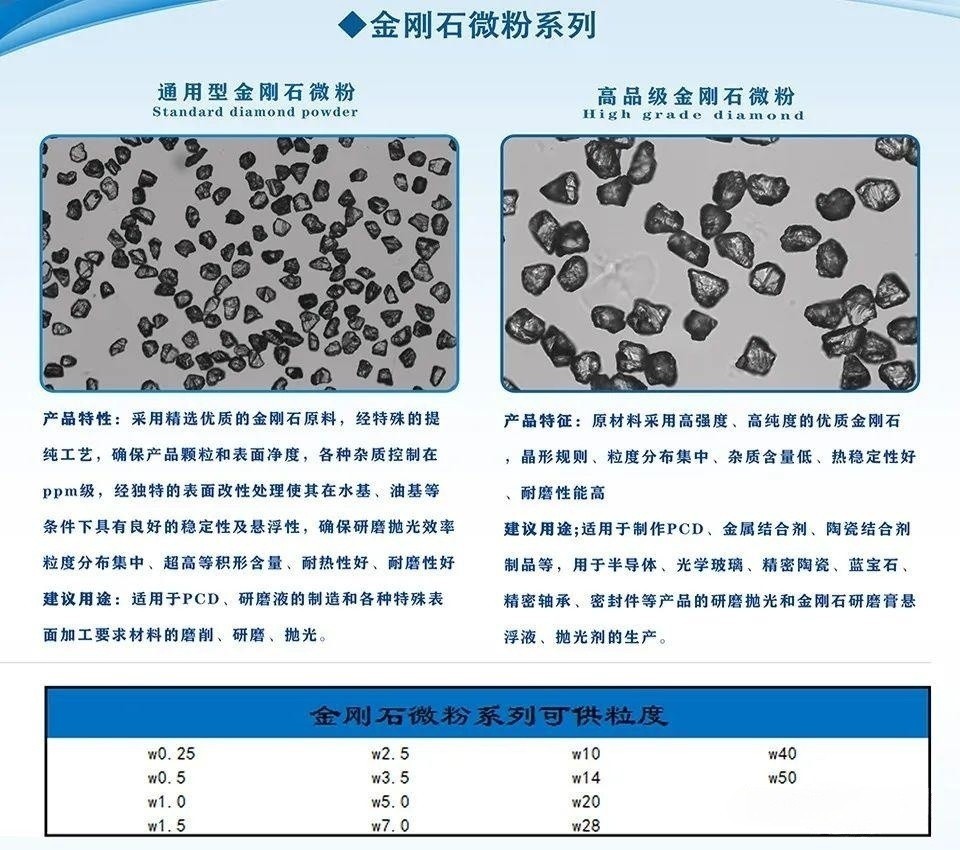
The main application of diamond powder
As a kind of super hard abrasive, diamond powder has incomparably superior grinding ability, which has been paid more and more attention by the industrial developed countries. The grinding ability of diamond powder includes the grinding ability of the workpiece and its own wear resistance and crushing resistance, depending on its microhardness, particle size, strength, particle size, and thermal and chemical stability. To sum up, diamond powder used as abrasive has three aspects; (1) Used in the manufacture of resin-bonded tools, metal-bonded tools, and plating tools. (2) for industrial, scientific and medical precision or polishing of various precision components. (3) as a fine abrasive for mold processing, gem polishing processing, gem bearing processing and manufacturing. In addition to the application of diamond powder as a grinding material, another major use is used as a functional material. For example, the use of its thermal properties and electrical properties. By mixing diamond fine powder into thermosetting resin polymer, cellulose, phenolic resin or ceramic sheet, a new material having improved thermal conductivity and reduced thermal expansion can be produced. The diamond powder mixed to the metal sheet, such as sheet or stainless steel sheet can be made with high thermal conductivity, low thermal expansion and light weight of the new sheet material, in the electronics industry can be made into high-density high-energy devices for thermal control. From the form of diamond used as grinding materials, according to the relevant data published figures, the world's industrial consumption of more than 60% of diamond powder is used to make diamond plaster, diamond powder mixture and diamond powder grinding fluid.
Key words:
2023/06/24

Ultra-precision polishing of precision instruments for the use of nanodiamonds
We add nano-diamond to the medium to make nano-diamond polishing liquid, which is now mainly divided into aqueous polishing liquid and oily polishing liquid. Because the nano-diamond polishing liquid nano-diamond particles super hard super hard, with it can remove the material surface small uneven, polished material surface roughness can be reduced to nano-level, so that the material surface finish is very high. At present, nano-diamond polishing liquid can be used in semiconductor silicon wafer polishing, computer head polishing, precision ceramic processing, gem polishing, optical glass polishing and other fields. Nowadays, due to the development of computers, people's requirements for computer storage capacity continue to increase, which makes us want to manufacture larger disks. In recent years, the storage capacity of computer disks has been increasing, but with the increase of storage capacity, the problem is that the gap between the disk and the head is getting smaller and smaller, which is close to 10NM. The surface roughness, scratches and impurity particles of the head and the disk will cause damage to the computer disk. As the distance between the disk and the head has reached the nanometer level, the micron-level polishing liquid has failed to meet the polishing requirements, so only nano diamond polishing liquid can meet the requirements of this aspect. We used nano-diamond polishing liquid to polish the computer magnetic head, and found that the surface smoothness of the magnetic head was greatly improved after polishing. The measured surface roughness at this time was 0.09~0.40nm, while the surface roughness of the magnetic head was 0.45~0.80nm after polishing with ordinary polishing liquid. Compared with nano-diamond polishing liquid, the effect of nano-diamond polishing liquid is much better, thus the quality of the computer magnetic head is also improved, and we can produce more precision, A computer disk with a larger storage capacity. It is worth noting that when polishing, because the computer and other electronic products most avoid corrosion, so be sure to control the pH of the polishing liquid, the study found that the PH value of the polishing liquid is more appropriate to control between 6.5 and 8. Since the content of anions Cl-and SO2-will determine the pH of the polishing solution, the content of Cl-and SO2-should be controlled when preparing the polishing solution for computer head polishing, and the PH value should be observed at the same time.
Key words:
2023/06/23

Characteristics of Shandong Metal Powder Hydraulic Press
Shandong metal powder hydraulic press is suitable for automatic control molding of powder dry pressing. It is widely used in electronics, powder metallurgy, soft magnetic industry, conductive dry pressing molding, chemical industry, automobile manufacturing, medicine, energy and environmental protection industry, toy industry, etc. Suitable dry-pressed powders include ferrous and non-ferrous metal powders, electronic ceramic powders, ferrites, rare earth powders, cemented carbide powders, PTFE, diamond and graphite powders, and the like. The hydraulic transmission system of Shandong metal powder hydraulic press is composed of power mechanism, control mechanism, actuator, auxiliary mechanism and working medium. The power mechanism usually uses an oil pump as the power mechanism, and is generally an integrated oil pump. One or more oil pumps are selected in order to meet the speed of movement of the actuator. Low pressure gear pump; medium pressure vane pump; high pressure piston pump. The pressure processing and forming of various plastic materials, such as the extrusion, bending, drawing of stainless steel plates and steel plates, and the cold pressing of metal parts, can also be used for the pressing of powder products, grinding wheels, bakelite and resin thermosetting products.
Key words:
2023/04/29

Factors Affecting Ultra-Precision Grinding and Polishing
In order to achieve sub-nanoscale or even nanoscale processing accuracy, the processing environment supported by ultra-precision grinding and polishing must be strictly controlled. The change of temperature not only affects the geometric accuracy of the grinding machine, but also affects the machining accuracy of the workpiece. Because the temperature of any object is not balanced, it will cause changes in size.
Key words:
2023/06/27
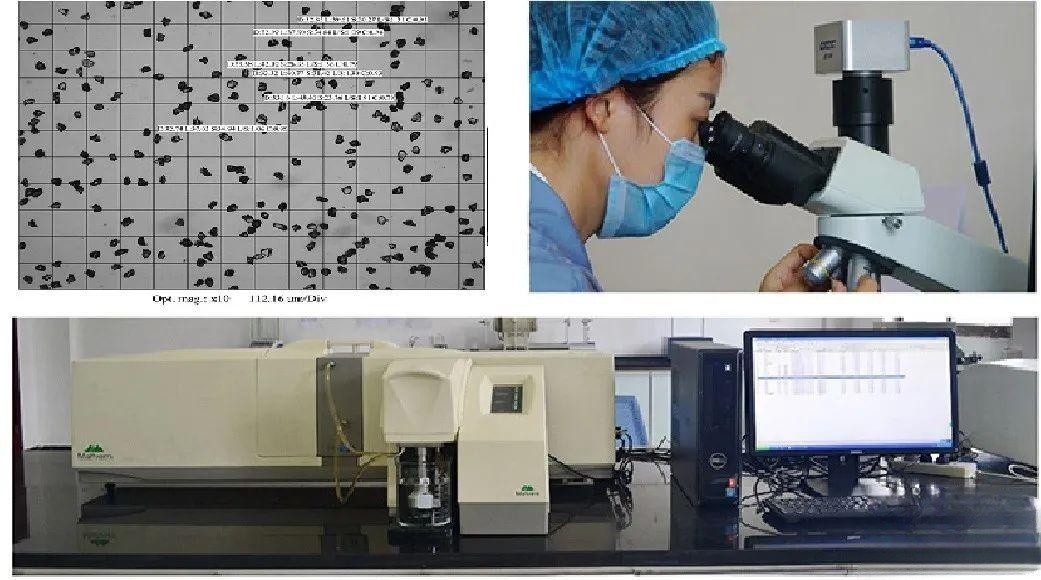
Several Characteristics Affecting the Quality of Diamond Powder
1. Control of diamond powder particle size and large particles 2. Control of the strength of diamond powder 3. Control of particle shape of diamond powder
Key words:
2023/06/20
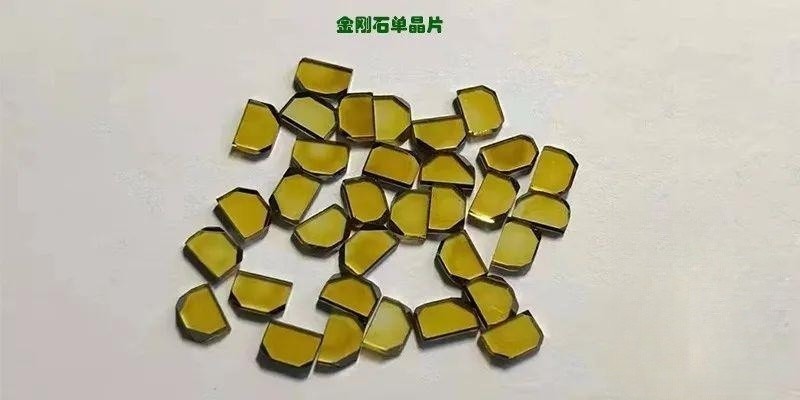
Thermal Conductivity and Application of Diamond Monowafer
The thermal conductivity of diamond is quite good, and it has been applied to many heat dissipation components. For example, the heat dissipation of cpu is coated with a layer of diamond film to speed up its heat dissipation. This is also the odd heat dissipation principle that determines its excellent heat dissipation performance. Diamond is the highest thermal conductivity of the material in nature-beyond the metal material, is a good thermal conductor, its thermal conductivity varies, generally 138.16W/(m · K). Type IIa diamond thermal conductivity is particularly good, in liquid nitrogen temperature is 25 times that of copper, the thermal conductivity at room temperature is as high as 2000W/(m · K), 5 times that of copper, with super thermal conductivity. According to the trace elements contained in diamond can be divided into type I diamond and type II diamond two types. Type II diamond has better thermal conductivity, solution and semiconductor properties, and is mostly used in space technology and cutting-edge industry.
Key words:
2023/06/13
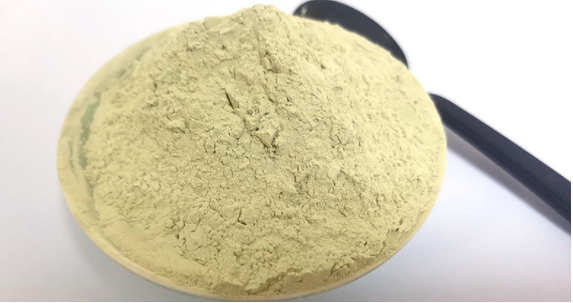
Teach you to understand magnesium oxide
Magnesium oxide is one of the main raw materials in magnesium cementitious materials, which can be divided into light burned magnesium oxide and heavy burned magnesium oxide according to the calcination production process. Active magnesium oxide is divided into high activity, medium activity and low activity according to iodine absorption (active magnesium oxide used in magnesite industry belongs to high activity magnesium oxide). Light burned magnesia refers to magnesia formed by magnesium compounds after magnesite ore is calcined at a high temperature of 700-900 degrees Celsius, also known as active magnesia, chemical formula MGO, relative molecular weight 40.3, melting point magnesia is one of the main raw materials in magnesia cementitious materials, it can be divided into light burned magnesia and heavy burned magnesia according to the calcination production process. Active magnesium oxide is divided into high activity, medium activity and low activity according to iodine absorption (active magnesium oxide used in magnesite industry belongs to high activity magnesium oxide). Light burned magnesium oxide refers to magnesium oxide formed by magnesium compounds after magnesite ore is calcined at a high temperature of 700-900 degrees Celsius, also known as activated magnesium oxide, chemical formula MgO, relative molecular weight 40.3, melting point 2800C °, boiling point 3600 °, odorless, tasteless, non-toxic, insoluble in pure water and organic solvents, solubility in water increases due to the presence of carbon dioxide, soluble in acid or ammonium salt solution, easy to deliquescence, in the air can gradually absorb carbon dioxide and moisture to form magnesium carbonate double salt. Heavy-burned magnesium oxide refers to high-purity magnesium oxide calcined at a high temperature greater than 1000 °, and generally refers to products with a purity of magnesium oxide of not less than 98%. It is mainly used in smelting, refractory materials, alloy materials and other fields as well as insulating fillers for electrical components. It can also be used to produce other magnesium salt materials. It is mainly used to prepare refractory materials.
Key words:
2023/06/09

CONTACT US
Address: east of Luxi Orthopedic Hospital, Guangyue Road, Liaocheng High-tech Industrial Development Zone